The Science of the Deep Freeze: How ULT Brine Freezing Delivers On-Deck Quality to European Markets
In the international trade of high-value pelagic fish, temperature control is the absolute factor determining market value. When importing raw or semi-processed tuna loins for European sushi chains, catering, or high-end retail, standard commercial freezing is simply insufficient.
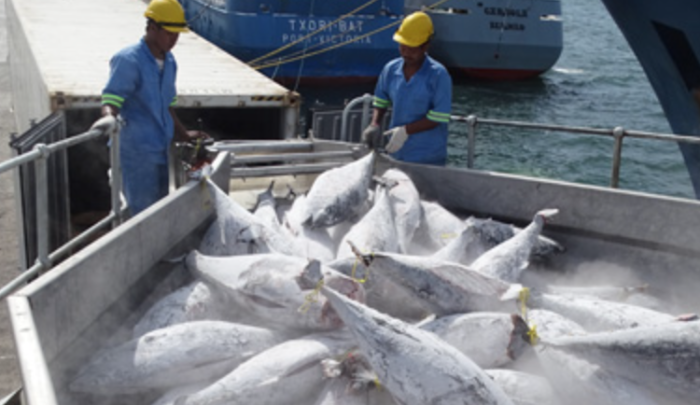
To prevent flesh degradation, moisture loss, and color fading during the 20-day ocean voyage from South America to Western Europe, Ecuador’s modern fishing fleet utilizes Ultra-Low Temperature (ULT) Brine Freezing systems (40 to -60 )onboard.
1. Cellular Integrity: Preventing “Drip Loss”
When fish tissue freezes slowly at standard temperatures ($-18^\circ\text{C}$), large ice crystals form within the muscle fibers. These sharp crystals puncture cell walls. When the buyer eventually thaws the fish in Europe, fluids drain out—a phenomenon known in the trade as “drip loss.”
Drip loss causes three major commercial problems:
- Weight Loss: Up to 8% of the product weight is lost as water.
- Texture Softening: The fish loses its firm, meaty texture, rendering it unsuitable for sashimi or grilling.
- Flavors Bleed: Essential umami compounds and natural oils drain away with the melted ice.
ULT brine freezing rapidly lowers the core temperature of the fish within minutes of capture, creating microscopic ice crystals that leave cell membranes completely intact. Upon thawing, the product retains 100% of its original moisture, firm texture, and vibrant color.
2. Cold Chain Security Across Atlantic Shipping Lanes
Freezing the fish at sea is only step one. Transporting the cargo across 6,000 nautical miles requires specialized reefer container management:
[ HARVEST ] ──► ULT Brine Freeze (-40°C) ──► Vacuum Skin Pack ──► Reefer Vault (Rotterdam/Algeciras)
By combining onboard ULT freezing with automated temperature logging throughout transit, Ecuadorian exporters deliver a product that performs identically to fresh, never-frozen catch upon arrival at European processing centers.
Request a thermal log audit. [Contact our logistics department to review verified temperature logs from our latest transatlantic reefer shipments.]