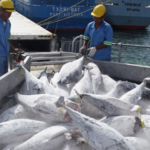
El Niño Hits Coastal Ecuador: Impacts on Tuna Landings and EU Imports
Oceanographic data confirms that warming sea surface temperatures associated with El Niño have fully materialized along the coastal waters of Ecuador (the Niño 1+2 region). With surface temperature anomalies exceeding average levels, the marine ecosystem of the Eastern Tropical Pacific is undergoing an oceanographic shift.
For European seafood buyers, wholesalers, and food service distributors, understanding how El Niño affects tuna behavior is critical for anticipating catch volume variations and securing supply commitments.
1. How Ocean Warming Alters Tuna Behavior
Tuna species—particularly Skipjack (Katsuwonus pelamis) and Yellowfin (Thunnus albacares)—are highly sensitive to thermal gradients:
- Vertical Migration: As surface waters warm, tuna dive deeper into cooler, oxygen-rich layers below the thermocline.
- Dispersal Patterns: Schools move away from coastal processing hubs like Manta and Posorja toward cooler open-ocean currents, increasing vessel transit days.
- Catch Performance: Deep-diving tuna become less accessible to standard surface purse-seine nets, temporarily lowering catch-per-unit-effort (CPUE) for local fleets.
2. The Processing Buffer: Why Supply to Europe Remains Secure
Despite changes in vessel catch rates, Ecuador’s processing infrastructure is built to withstand oceanographic fluctuations:
- Cold Storage Reserves: Onshore processing facilities maintain heavy raw material inventories, ensuring processing lines run without interruption.
- Brine-Freezing Capability: Advanced vessels utilize onboard brine systems to instantly chill catches regardless of warmer ocean conditions at the surface.
- Strategic Sourcing: Integrated fleets adapt by expanding their operational radius across FAO Zone 87 to track migrating stocks.
SURFACE OCEAN WARMING ──► Deep thermocline migration ──► Longer vessel trips ──► Shore cold storage buffer engages
3. Strategic Recommendations for European Buyers
During an active El Niño cycle, spot market prices can react to perceived supply tightness. European procurement managers should establish fixed-volume forward contracts to lock in pricing and guarantee delivery schedules through the upcoming quarters.
Protect your procurement against climate volatility. [Speak with our international trade desk to review current inventory reserves and locked-rate contract options.]